

Watermelon
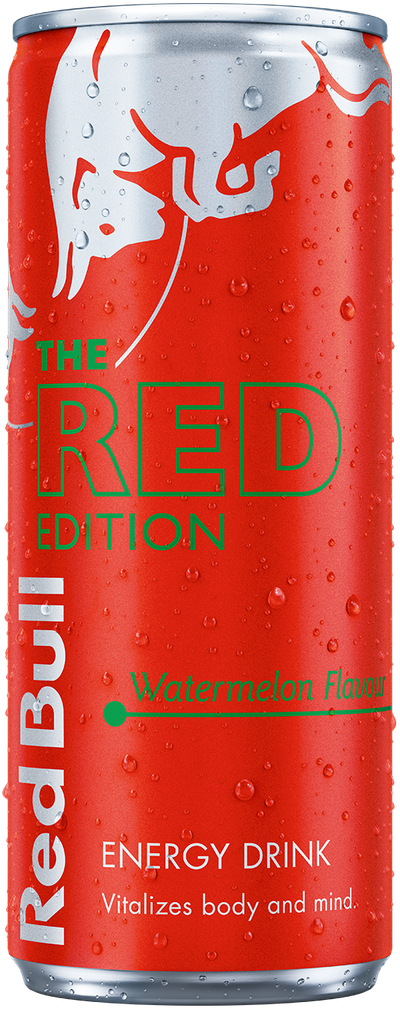
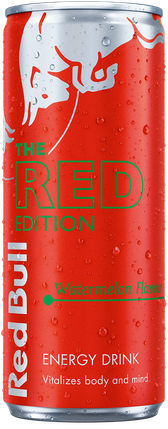
The Red Bull Red Edition offers the taste of watermelon.
The Red Bull Red Edition contains caffeine that helps to improve concentration and increase alertness.
The Red Bull Red Edition contains B-group vitamins (niacin, pantothenic acid, B6, B12), which contribute to the reduction of tiredness and fatigue.
The Red Bull Red Edition contains real sugar, a fast-absorbing form of carbohydrate involved in a wide range of biological processes and an energy source for the brain and muscles.

Each 250 ml can of Red Bull Red Edition contains 80 mg of caffeine. Caffeine helps to improve concentration and increase alertness.
One of the most abundant amino acids in the heart and muscles. Taurine is involved in a range of processes including regulation of water/electrolyte balance at the cellular level.
Red Bull Red Edition contains B-group vitamins (niacin, pantothenic acid, B6, B12), which contribute to the reduction of tiredness and fatigue.
One 250 ml can of Red Bull Red Edition contains 27 g of sugars, a type of carbohydrate, which are a fuel source for the body – including the brain and muscles.
Water is the main ingredient of Red Bull Red Edition. Dedication to its quality contributes to the iconic taste in every sip.

Watermelon
The Red Bull Red Edition offers the taste of watermelon.
The Red Bull Red Edition contains caffeine that helps to improve concentration and increase alertness.
The Red Bull Red Edition contains B-group vitamins (niacin, pantothenic acid, B6, B12), which contribute to the reduction of tiredness and fatigue.
The Red Bull Red Edition contains real sugar, a fast-absorbing form of carbohydrate involved in a wide range of biological processes and an energy source for the brain and muscles.
Each 250 ml can of Red Bull Red Edition contains 80 mg of caffeine. Caffeine helps to improve concentration and increase alertness.
One of the most abundant amino acids in the heart and muscles. Taurine is involved in a range of processes including regulation of water/electrolyte balance at the cellular level.
Red Bull Red Edition contains B-group vitamins (niacin, pantothenic acid, B6, B12), which contribute to the reduction of tiredness and fatigue.
One 250 ml can of Red Bull Red Edition contains 27 g of sugars, a type of carbohydrate, which are a fuel source for the body – including the brain and muscles.
Water is the main ingredient of Red Bull Red Edition. Dedication to its quality contributes to the iconic taste in every sip.


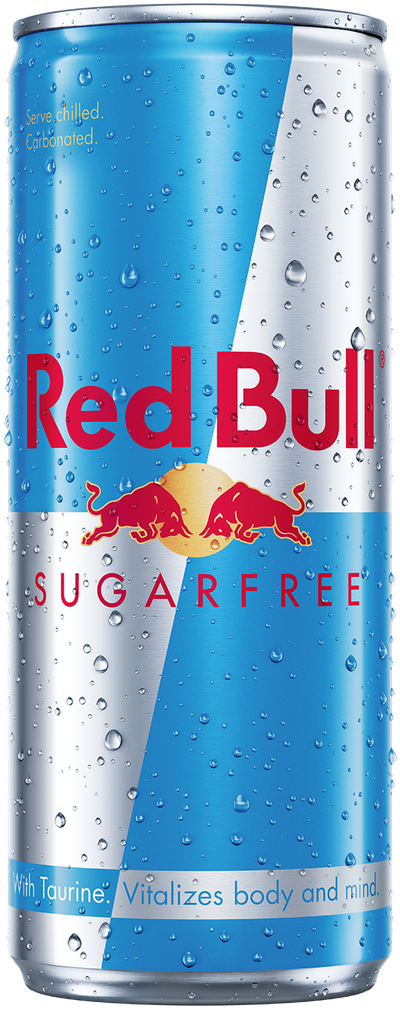
Red Bull Zero contains the same functional ingredients as Red Bull Energy Drink (caffeine, taurine and some B-group vitamins) but is made with low- and non-caloric sweeteners; erythritol, sucralose and monk fruit extract. Monk fruit extract is a non-caloric sweetener used in a wide range of products, like juices, soft drinks, candies and desserts.
Red Bull Energy Drink is gluten-free, lactose-free and dairy-free.
Red Bull Energy Drink and Red Bull Sugarfree do not contain any products or substances derived from animals.
Red Bull's main production sites for the world are in Austria, Switzerland and the US.
Health authorities around the world have concluded that Red Bull Energy Drink is safe to consume. Red Bull Energy Drink is available in more than 175 countries.
Red Bull Zero contains the same functional ingredients as Red Bull Energy Drink (caffeine, taurine and some B-group vitamins) but is made with low- and non-caloric sweeteners; erythritol, sucralose and monk fruit extract. Monk fruit extract is a non-caloric sweetener used in a wide range of products, like juices, soft drinks, candies and desserts.
Red Bull Energy Drink is gluten-free, lactose-free and dairy-free.
Red Bull Energy Drink and Red Bull Sugarfree do not contain any products or substances derived from animals.
Red Bull's main production sites for the world are in Austria, Switzerland and the US.
Health authorities around the world have concluded that Red Bull Energy Drink is safe to consume. Red Bull Energy Drink is available in more than 175 countries.


